
Nebraska’s Prenatal-to-Age-3 Plan
Nebraska’s Prenatal-to-Age-3 Plan will make equitable, high-quality programs and services more accessible to pregnant women, infants and toddlers throughout the state.
Statewide initiative focused on our youngest children
The first three years—beginning in the prenatal period—are crucial to children’s lifelong development. During this time, the developing brain forms as many as one million new neural connections per second, which makes children’s earliest experiences crucial to their future learning, as well as their mental, behavioral and physical health. However, far too many families in Nebraska lack ready access to essential programs, services and systems that help meet the specific developmental needs of very young children.
In response to this challenge, First Five Nebraska is coordinating a statewide Prenatal-to-Age-3 (PN-3) Plan to advance public policies and strengthen systems to help families better guide the healthy development of their youngest children. This cross-sector effort involves close collaboration with Nebraska’s Preschool Development Grant partners—including state agencies, business and economic development leaders, early childhood professionals and families—to increase equitable access to high-quality early care and learning, health, mental health and social service supports. Nebraska’s PN-3 Plan is part of a national effort funded by the Pritzker Children’s Initiative (PCI), and led in collaboration with the National Coalition for Infants and Toddlers (NCIT) and the Prenatal-to-Three Policy Impact Center.
Increasing access across Nebraska
Working together, we have set ambitious goals for connecting more Nebraska families—especially those of low income—to essential early childhood programs and services:
- Near-term goal: 25% increase in access (15,000 children by end of 2023)
- Long-term goal: 50% increase in access (30,050 children—ongoing)
Aligned early childhood systems and supports
Nebraska’s PN-3 Plan involves community and state leaders in coordinating a full suite of aligned, accountable and sustainable early childhood systems and supports. Focus areas include:
- Ensuring higher levels of access to subsidized and transitional child care assistance
- Increasing the quality, capacity and availability of quality child care programs
- Expanding availability of nutritional supports, developmental screenings, prenatal and maternal mental health services
- Reducing infant and maternal morbidity rates
All goals and strategies for Nebraska’s PN-3 Plan represent a commitment to ensure equitable participation so families, children and providers of diverse race, ethnicity and language can thrive.
Movement Building Grant
Building on the success of the initial grant, PCI awarded Nebraska a Movement Building Grant to help reach the goal of every child flourishing by age 3 and families with access to the resources and supports they need to thrive. The grant supports implementing a prenatal-to-age-3 system in the state and runs through December 2025. It prioritizes the three historically underserved and marginalized communities of Grand Island, Lexington and North and South Omaha.
Nebraska’s goals for the Movement Building Grant include:
- All families have access to affordable, high-quality infant and toddler early care and education
- Every family with young children is offered an evidence-based home visit
- The PN-3 coalition is strong and representative of the racial, economic and geographical diversity of the state and includes the voices of lived experience
Community Voice Partnership Grants
To support the goals of the Movement Building Grant, First Five Nebraska has made Community Voice Partnerships Mini Grants available in the prioritized communities. They are intended to:
- Address local capacity needs and convene families with young children and service providers who support families and children
- Identify barriers to accessing services and develop a plan to address the barriers
- Support grassroots organizing to develop continuous feedback loops to help policy professionals such as First Five Nebraska and decision-makers understand barriers families and providers experience, and work together to reach solutions. Leverage the leadership and experience of local Policy Leadership Academy alumni.
Featured Publications

Child Care Could Be Part of Community Reinvestment—Here’s Why That Matters
What does a bank have to do with child care? For rural communities, the answer is: quite a lot. When a community does not have enough child care, parents can have trouble getting to work. Employers can have trouble finding workers. Child care providers may have long...

Op-Ed by Head Start Parent Mark Haba: Head Start Proposed Rules Put Essential Services at Risk
This op-ed by Nebraskan Mark Haba was published in the Lincoln Journal Star on September 29: bit.ly/47pWIOD I'm a past Policy Council member and current board member at Head Start Child & Family Development Program, Inc. I am also a parent board member at Region...

Early Futures Partnership Submits Comment on Proposed Federal Changes to Head Start
Early Futures Partnership submitted this comment on the Administration's proposed changes to Head Start. We urge Nebraskans to learn more about the proposal and submit their own comment in opposition before the October 6 deadline. Learn more about the proposed changes...

FFN Staff to Testify at Interim Study Hearings This Week
FFN policy staff will testify at four hearings for interim studies this week. They are among the seven studies we're working on with state senators this year. Interim studies allow senators to explore topics they're interested in, and often lead to legislation. As...

Federal Officials Announce Proposed Changes to Head Start
On August 6, the U.S. Department of Health and Human Services announced the most significant Notice of Proposed Rulemaking (NPRM) on Head Start Program Performance Standards in its decades-long history. The NPRM is the first stage in a long process—one that can take...
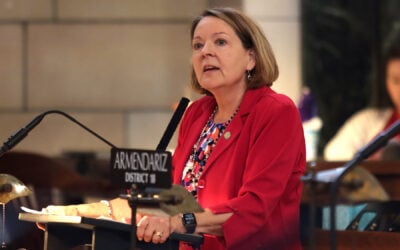
Home Visiting Legislation Creates Positive Results for Parents, Kids
Investing in children’s lives during their earliest years helps them build the foundation for all future learning, development, health and academic achievement. One proven way to support families is through evidence-based home visiting programs. These programs pair...
