

In March, First Five Nebraska released Working Families, Working Economy: An Examination of the Economic Impact, Supply and Demand of the Child Care System in the Greater Omaha Chamber Region. The report was commissioned by the Greater Omaha Chamber (GOC) to better understand the impact of the current child care system on the regional economy, providing data for decision-making to support workforce participation and economic growth.
Child care supports both the current and future workforce. There are three key qualities of a child care system that support parents’ ability to work and businesses’ ability to operate successfully:
- Access. There is sufficient child care to meet the needs of working parents.
- Affordability. Available child care is priced within reach of family budgets.
- Quality. Available child care is safe and meets the developmental needs of children, helping to build the future workforce.
Economic impact of inadequate child care
Inadequate child care is costing the GOC area. Research on working parents demonstrates that child care concerns routinely encourage some parents to reduce or interrupt their participation in the labor market, leading to absenteeism, turnover, remaining at or changing to part-time employment and forgoing promotion opportunities. Analysis from the Bureau of Business Research at the University of Nebraska-Lincoln estimates that these interruptions lead to annual direct losses in labor income for parents ($670.5 million), productivity and output for businesses ($269.9 million) and value-added ($269.9 million), defined as the difference between output (the total value of production) and the value of intermediate goods and services purchased as inputs to production.
These direct losses ripple through the economy—when parents have less income, they spend less. These multiplier impacts, estimated utilizing the IMPLAN model, lead to a combined loss (direct + multiplied) of $1.02 billion for business output, $919.2 million in labor income and $738.3 million in value added. This leads to 3,909 fewer jobs in the GOC region.
Estimated Annual Impact of Inadequate Child Care in the GOC Region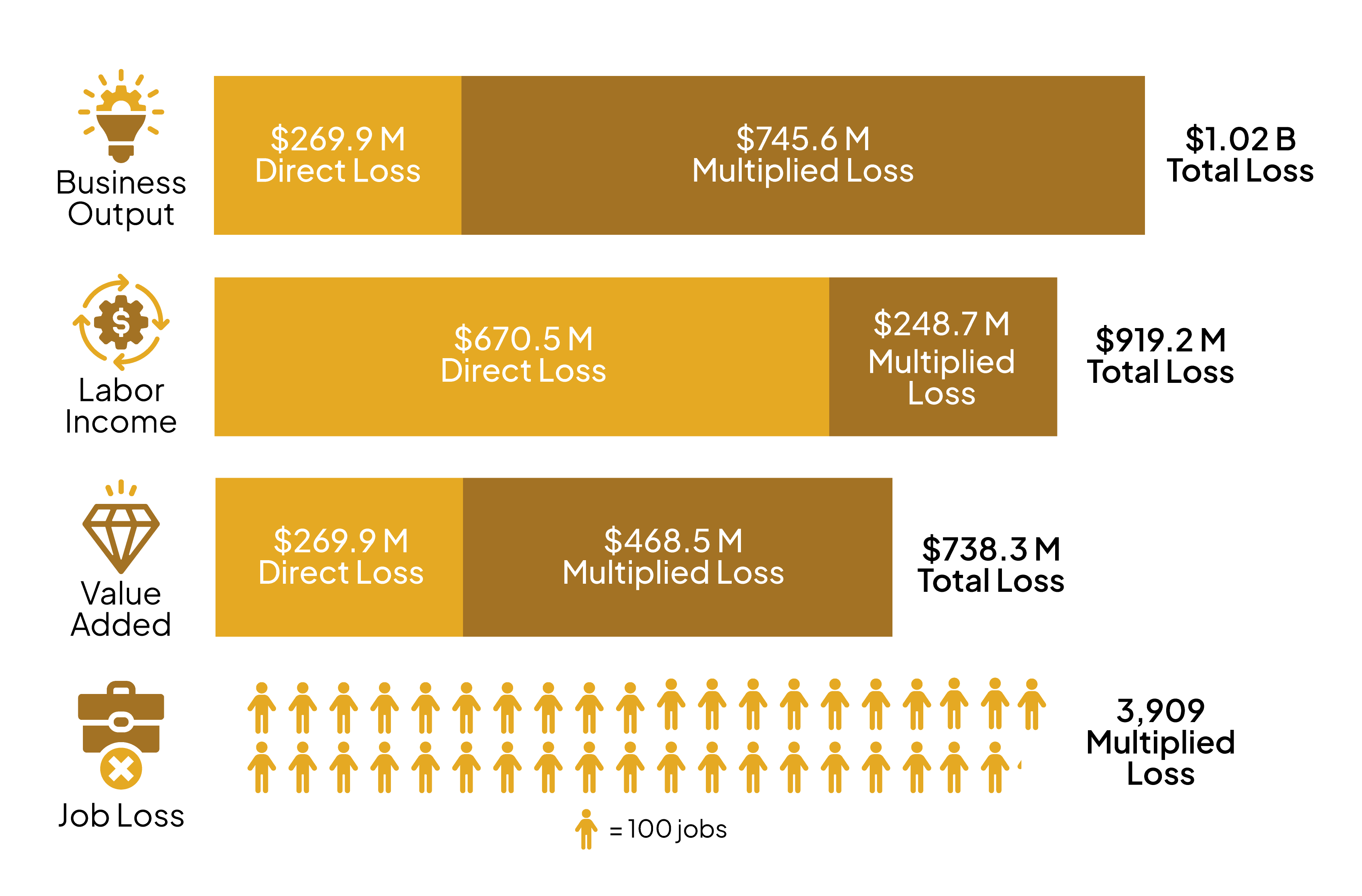
Source: BBR Calculations
Access
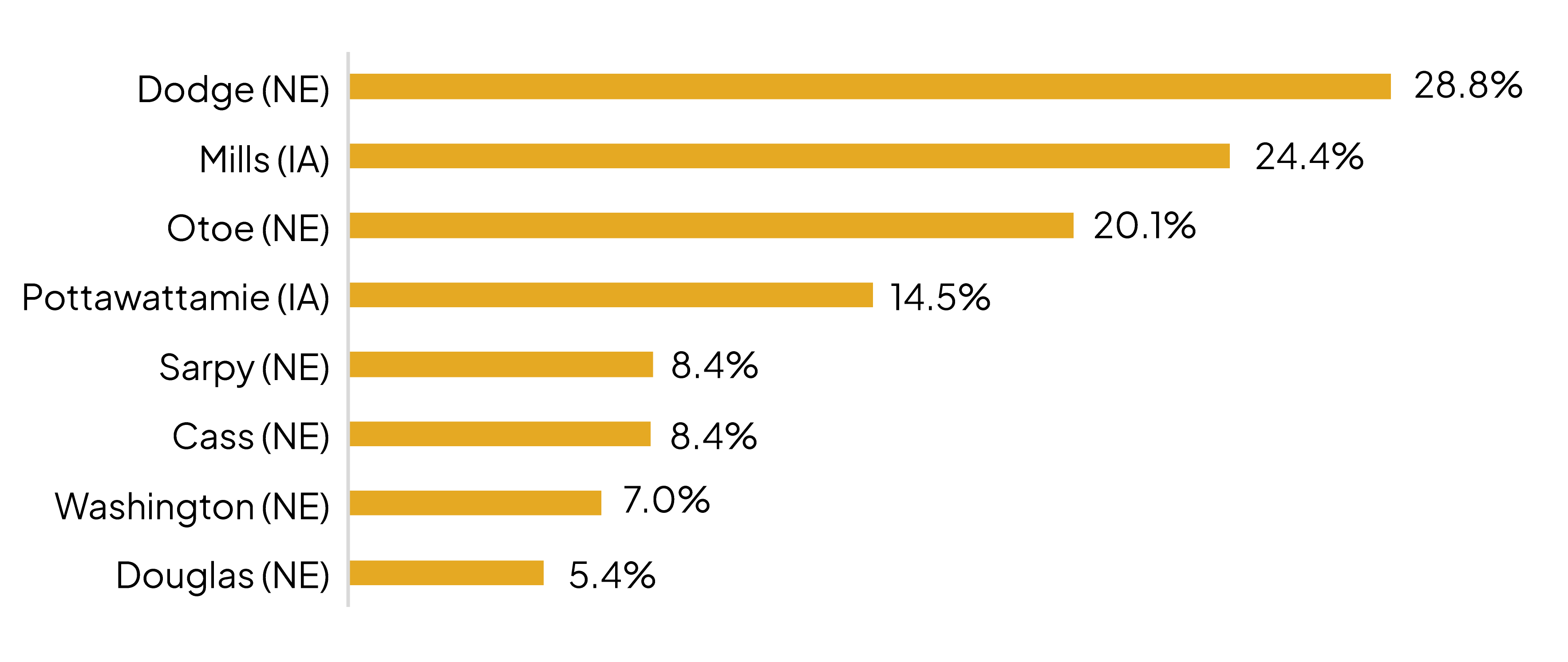
Analysis from thechildcaregap.org shows that there are 4,730, or 8.3%, more children who potentially need care than there are licensed child care slots in the GOC region. In fact, all eight counties in the GOC region have a child care gap.
Percent Child Care Gap Percentage by County
 Source: Buffett Early Childhood Institute. (2025). childcaregap.org/
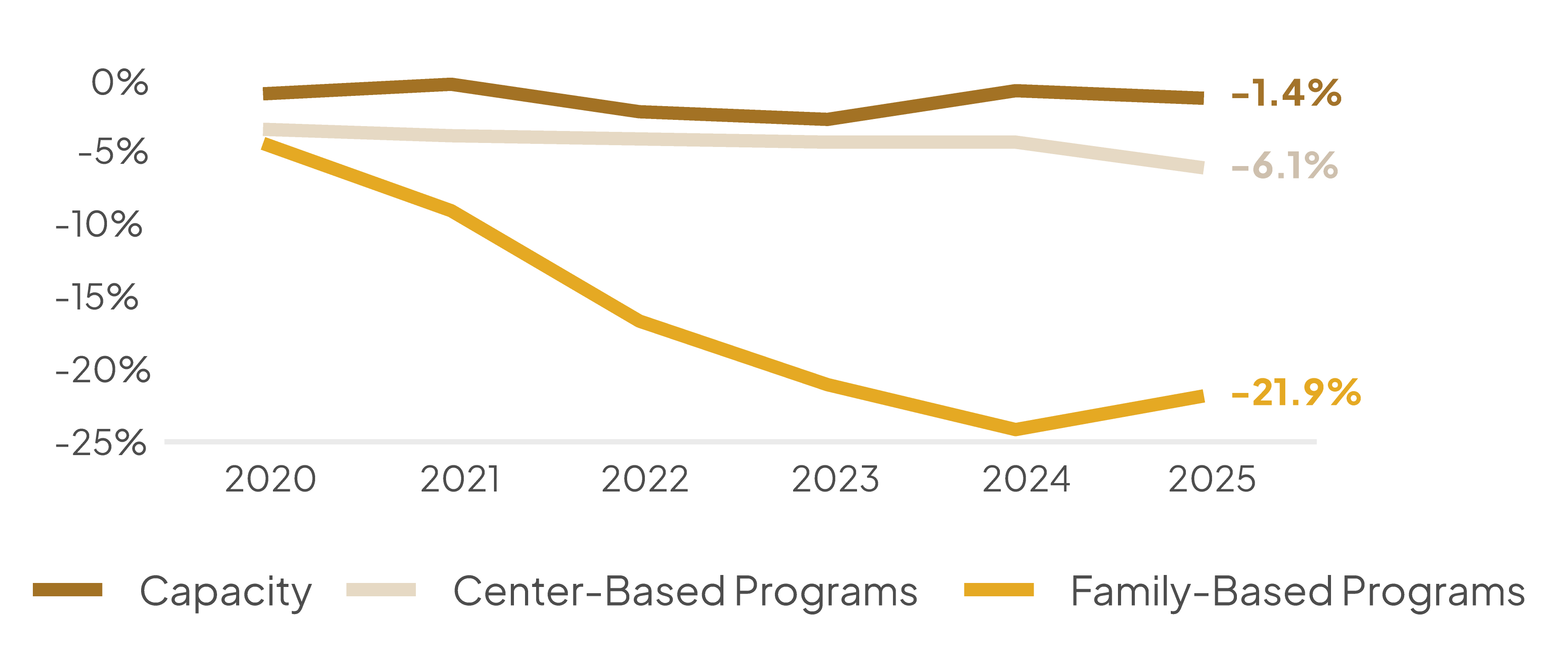
A look at the over-time trends in programs and capacity in the GOC area reveals that there has been a slight decrease in the overall child care capacity since 2019 (-1.4%). However, the number of available programs has decreased, restricting parent choices. The total number of child care centers has decreased by 6.1%, while the total number of family-based programs, which are typically more affordable, has decreased by 21.9%.
Percent Change Since 2019 in Capacity & Number of Licensed/Regulated Child Care Programs in GOC Area
Sources: Nebraska Department of Health and Human Services and Iowa Child Care Resource & Referral
Affordability
Several factors can drive parent demand for child care, and affordability is often a central consideration. Analysis of parent-survey responses from Kidsights Data found that nearly 60% of children in the GOC area spend more than 10 hours a week in child care, with the majority of those children receiving that care in centers (52.8%) or preschools (22.4%). Parents in the Greater Omaha area pay an average of $250 per week for one child in child care and $450 per week when more than one child is in child care.
Kidsights Data highlights that families in the GOC area have very different experiences with child care based on their income. Families who earn less than $100,000 per year are less likely to utilize child care outside the home compared to families who earn more than $100,000 (32% and 68%) but are significantly more likely to quit or change a job due to trouble accessing child care (29% and 12%, respectively).
Child Care Experiences by Income of Families in Greater Omaha Area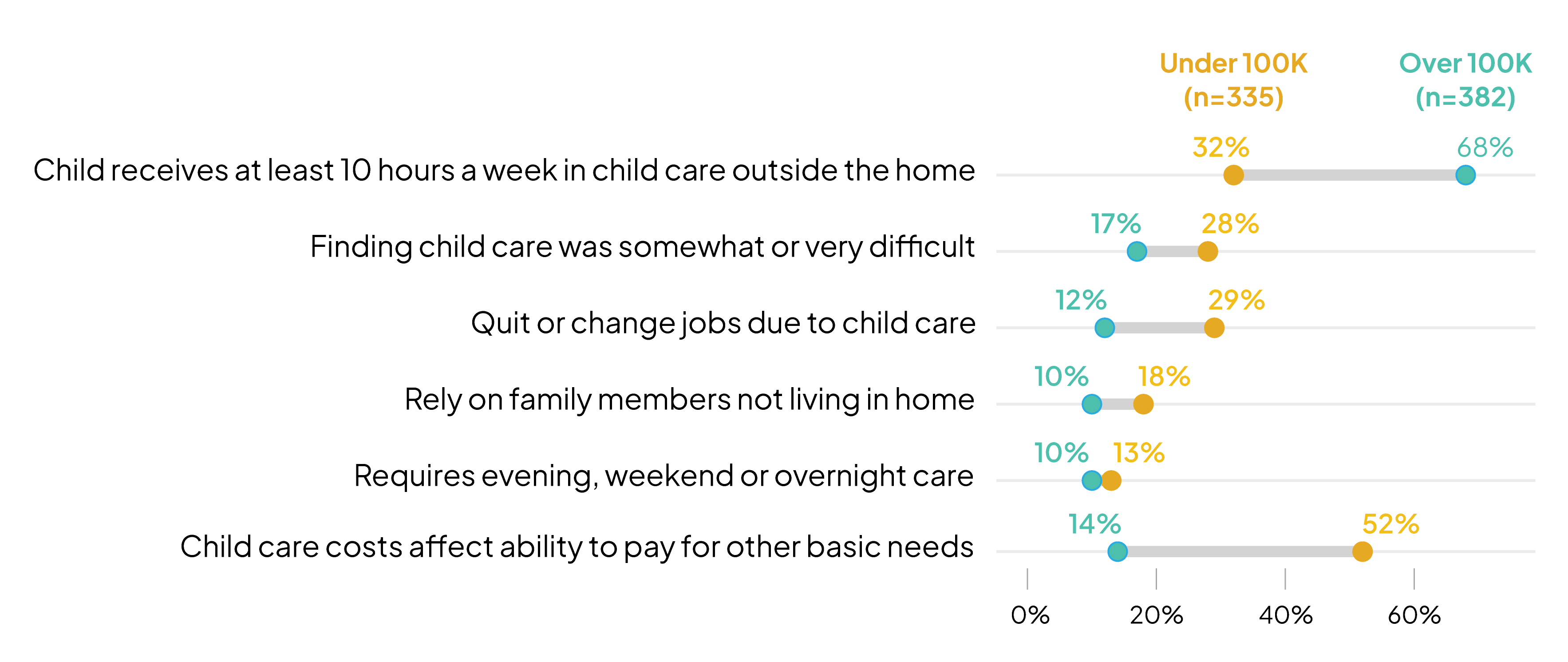
Source: Kidsights Data, University of Nebraska Medical Center College of Public Health, requested data received November 7, 2025
Quality
The majority of families (92.6%) in the GOC area are either very satisfied or satisfied with their current child care arrangement, regardless of the setting (Kidsights Data), a sign that parents are happy with the quality of child care. In two recent studies, Impact of Income Eligibility Expansion of the Child Care Subsidy Program in Nebraska Technical Report and Impact of On-site Education and Child Care: Primrose School at Hudl, positive interactions with staff were central to Nebraska parents’ positive experiences in child care.
In these same studies, high staff turnover and lack of staff expertise were central to parent descriptions of negative child care experiences. Analysis from the Nebraska Department of Labor shows the annual turnover for the child care industry in the GOC area (excluding Iowa counties) is currently 19%. Just 32% of the workforce in 2025 was working in the field in 2020. When programs experience a high rate of turnover, quality may suffer and programs will serve fewer children.
Conclusions
The economic impact of inadequate child care in the GOC area is significant, and solutions must consider the interconnected nature of access, affordability and quality. The Greater Omaha Chamber has an important role to play as an expert in economic development and a voice, convener and resource for the Omaha-area business community. Commissioning this study was an important first step in developing data-driven solutions.
Read the complete findings and recommendations from the study here.