
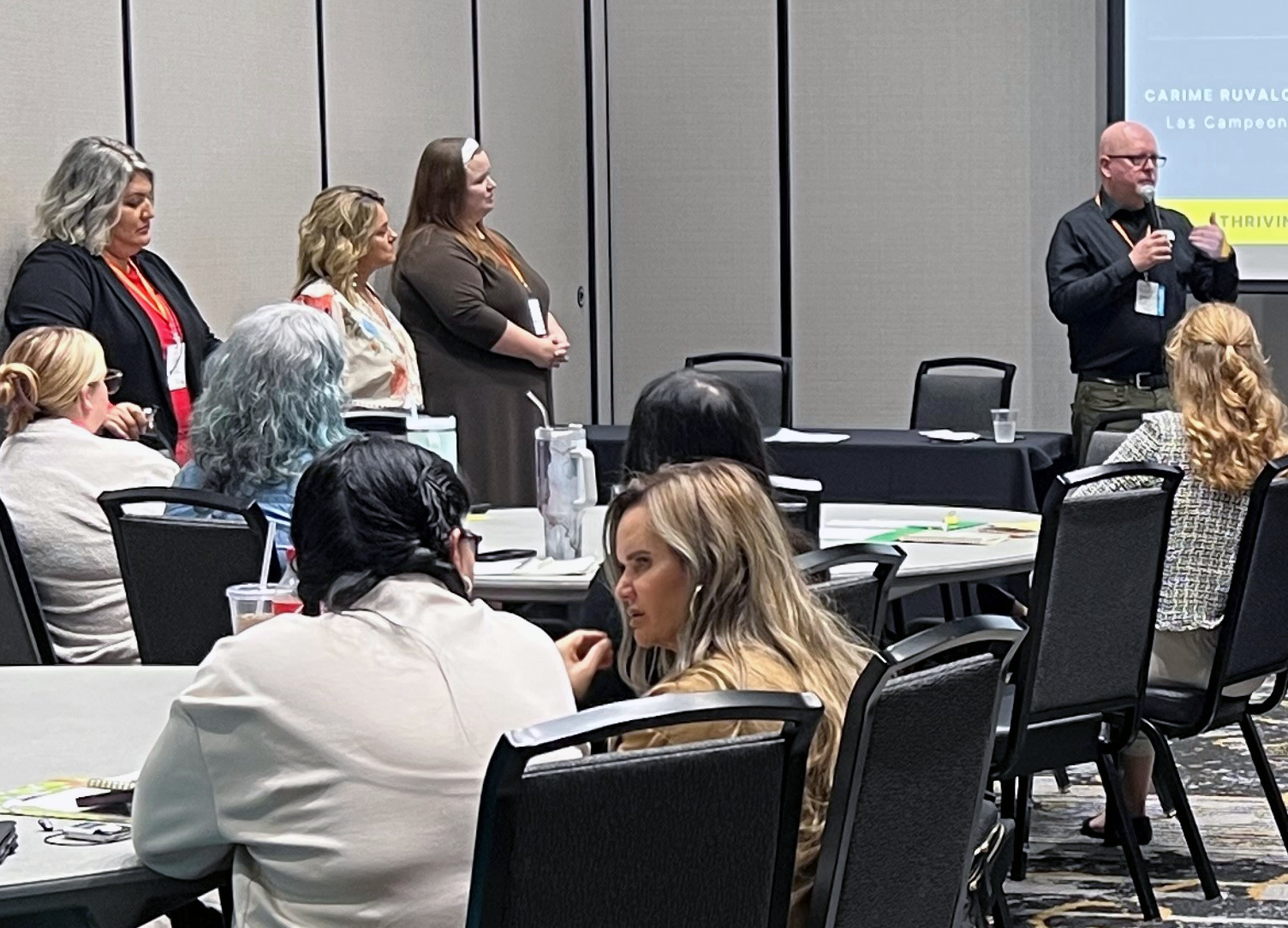
The 2025 Thriving Children, Families, and Communities Conference in Kearney was a resounding success, bringing together nearly 500 diverse participants—from child care providers to business leaders and policy advocates. Hosted by the Community for Kids team, this gathering proved that momentum builds when people unite around shared purpose.
I was honored to be invited to present on grassroots policy advocacy and, upon reflecting on my own partners, I chose authenticity over theory. Instead of delivering another standard presentation, I invited four grassroots organizers actually doing this work to join me, transforming our session into a real-time exploration of effective community advocacy.
Meet the Experts
Rather than present high-level theories about grassroots advocacy, I wanted the room to hear from those actually building movements in their communities. Four organizers joined me, each representing broader community leadership teams and collaborative efforts: Tiffany Walker, representing the partnership between child care providers and economic developers in Legislative District 1; Kristine VanHoosen, part of a nine-person advocacy team addressing child care challenges in Grand Island; Carime Ruvalcaba, working with Spanish-speaking community advocates to remove language and training barriers statewide; and Robert Patterson, member of a steering team uniting Omaha’s disenfranchised communities around shared solutions.
Their diverse collaborative work revealed three consistent principles underlying successful grassroots advocacy.
Principle #1: Be Coordinated
Omaha’s steering team exemplified coordination through transparent, clear communication with their community. They intentionally built from each member’s strengths, ensuring key representation came directly from the Omaha community itself and worked closely with partners to define appropriate roles for maximum engagement. This wasn’t rushed work—it was planned, thoughtful and coordinated and stretched over a year.
Tiffany Walker’s team learned a similar lesson about taking time to get coordination right. They discovered they needed to expand beyond their initial group of child care providers, recognizing that economic developers were essential partners for truly impactful work that represented the broader community. Through deliberate relationship-building and collaborative conversations with other child care and business experts, they created a coalition stronger than any single organization or sector could achieve alone.
The key practices of coordination are clear: identify communication channels, work from the strengths of the community and each leadership member, ensure authentic community representation, take time to identify all necessary stakeholders and foster genuine collaborative relationships rather than superficial partnerships.
Principle #2: Be Strategic
Carime Ruvalcaba’s colleagues working with Spanish-speaking advocates demonstrated strategic thinking by recognizing that generic approaches wouldn’t address their community’s specific barriers. They developed culturally relevant strategies, carefully timed their efforts and invited partners to collaborate on plans addressing both short-term solutions and long-term systemic change. This included training needs for emerging advocates in their communities. Like Robert Patterson’s Omaha team, they focused on raising up more confident, equipped advocates from within their community by securing advocacy training and systems mapping tailored to the other emerging advocacy leaders.
Both groups exemplified strategic patience—taking time to clarify action plans while trusting their communities’ leadership and understanding everyone’s expertise limits. With that clarity, they were strategic about partner and expert selection and timing of invitations. Kristine VanHoosen’s nine-person team balanced urgent needs with sustainable solutions, intentionally auditing the full landscape of resources, supporters and potential resistance. Remembering that “all politics is local,” they began in their own backyard, moving on to connect their community work to broader state-level issues and tailoring messages for various likely and unlikely allies.
Tiffany Walker’s District 1 team showed strategic flexibility when their initial aggressive timeline and plan needed adjustment. Rather than rushing and succumbing to their real sense of urgency, they pivoted to a strategy yielding better long-term results and positioning them as genuine partners to decision-makers. This pivot delivered both immediate political wins and ongoing benefits.
Principle #3: Be Credible
All four organizers built credibility by combining accurate, relevant data with authentic community stories. They didn’t rely solely on statistics or anecdotal evidence—they paired data with real faces and voices while ensuring their information could withstand policy scrutiny. This approach built credibility across extending strata of power.
Robert’s and Carime’s teams did the often underestimated work of building trust within their own communities—people worn down by seasons of being silenced, overlooked or tokenized by local and state leaders in both profit and nonprofit sectors. This internal trust-building proved essential for sustainable and authentic advocacy.
Credibility means bringing the right people forward at crucial moments. Each team ensured those with lived experience led conversations where authenticity mattered most, while building relationships with partners who could provide specific expertise—community organizations, child care technical assistance teams, economic developers, statisticians, advocacy strategists and policy experts. The practices are essential: use relevant, accurate data supporting real community stories, build genuine internal and external trust, ensure authentic voices lead when lived experience matters and maintain consistency of purpose over time.
Food for thought & call to action
These three principles—being coordinated, strategic and credible—don’t operate in isolation. They work together as a powerful framework for sustainable, powerful change, each reinforcing the others to build movements that can create lasting impact.
What made these advocacy groups effective wasn’t perfection—it was their commitment to these principles even when the work took longer than expected, required difficult pivots or challenged both internal and external ideas about power and representation. They understood that real grassroots advocacy isn’t about quick wins; it’s about building movements that sustain themselves.
As we continue supporting grassroots efforts in early childhood and maternal health advocacy, these principles offer a framework for growth. Ask yourself: Are we truly coordinated, strategic and credible? How would we know? When we get these elements right, we don’t just win campaigns—we build power.
P.S. Keep your eyes out for more detailed case studies and stories about each of these four organizing efforts—we’ll be sharing deeper dives into their strategies, challenges and wins as their work continues to unfold.